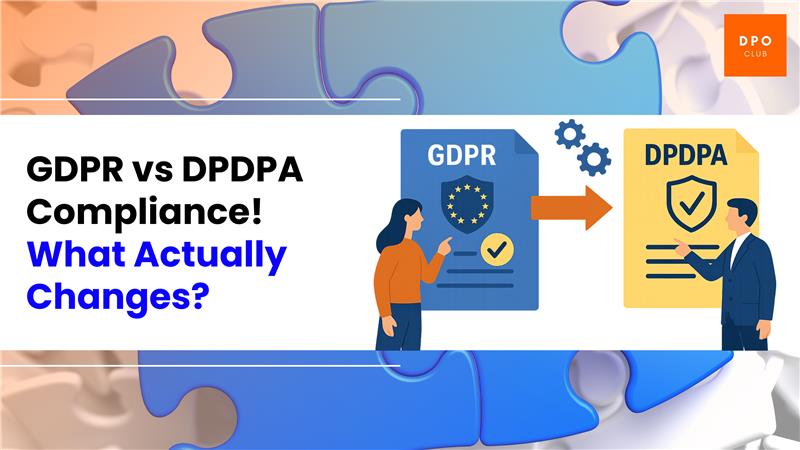
If your organisation already runs a mature GDPR program, you’re 70–80% of the way toward DPDPA compliance.
However, the remaining 20–30% includes critical, India-specific operational obligations that the Data Protection Board of India (DPBI) will fervently ensure!
What Stays the Same
GDPR already covers the heavy lifting: strong notices, high-quality consent, minimisation, retention limits, audits, security standards, and structured DSAR processes.
India’s DPDP Act mirrors this. No reinvention needed.
In fact, if you follow ISO/NIST/GDPR-grade security, your technical stack already exceeds DPDP’s baseline expectations.
What DPDPA Adds (That GDPR Doesn’t)
This is where organisations will spend time, budget, and engineering hours:
India-Based Grievance Officer for Significant Data Fiduciary (SDFs) (Mandatory)
DPDP requires a dedicated, reachable, India-established grievance contact for users.
This is separate from your DPO. (S.10(2))
The “Consent Manager” Ecosystem
2.Unique to India.
Organisations must be able to integrate with DPDP-registered Consent Managers. This is an interoperable layer for consent coordination, different from the GDPR.
3.Age-Gating at 18 (Not 16)
This increment must be adjusted to reflect the Indian Standards. Platforms must build stricter verification and parental consent flows for minors.
4.India-Specific Data Transfers
DPDP uses a black-list system, i.e., cross-border transfer is allowed by default
except to countries that the Central Government may notify as prohibited.
Your data routing and vendor contracts will need Indian segmentation.
5.Breach Notification to the Data Protection Board
Regulatory timelines and formats differ from EU requirements.
Under the DPDPA, Notification upon awareness of breach must be “without delay”
Update your incident response playbooks to react with this urgency.
6.Simplified but Distinct Data Subject Access Rights (DSAR) Rights
DPDP excludes rights like portability and objection. (Except cases under the Account Aggregator framework set up by Indian regulators to facilitate secure, consent-driven sharing of financial data between financial institutions).
You will need India-specific DSAR templates and workflows.
In Short…
GDPR gives you a great foundation.
But the DPDP has added operational, legal, and technical additions that ensure systems, contracts, and teams cater to India’s regulatory standards. Therefore, you need a dedicated India compliance template across governance, engineering, and customer service.
Need support in your privacy compliance? Just DM to receive support from the best DPO network!